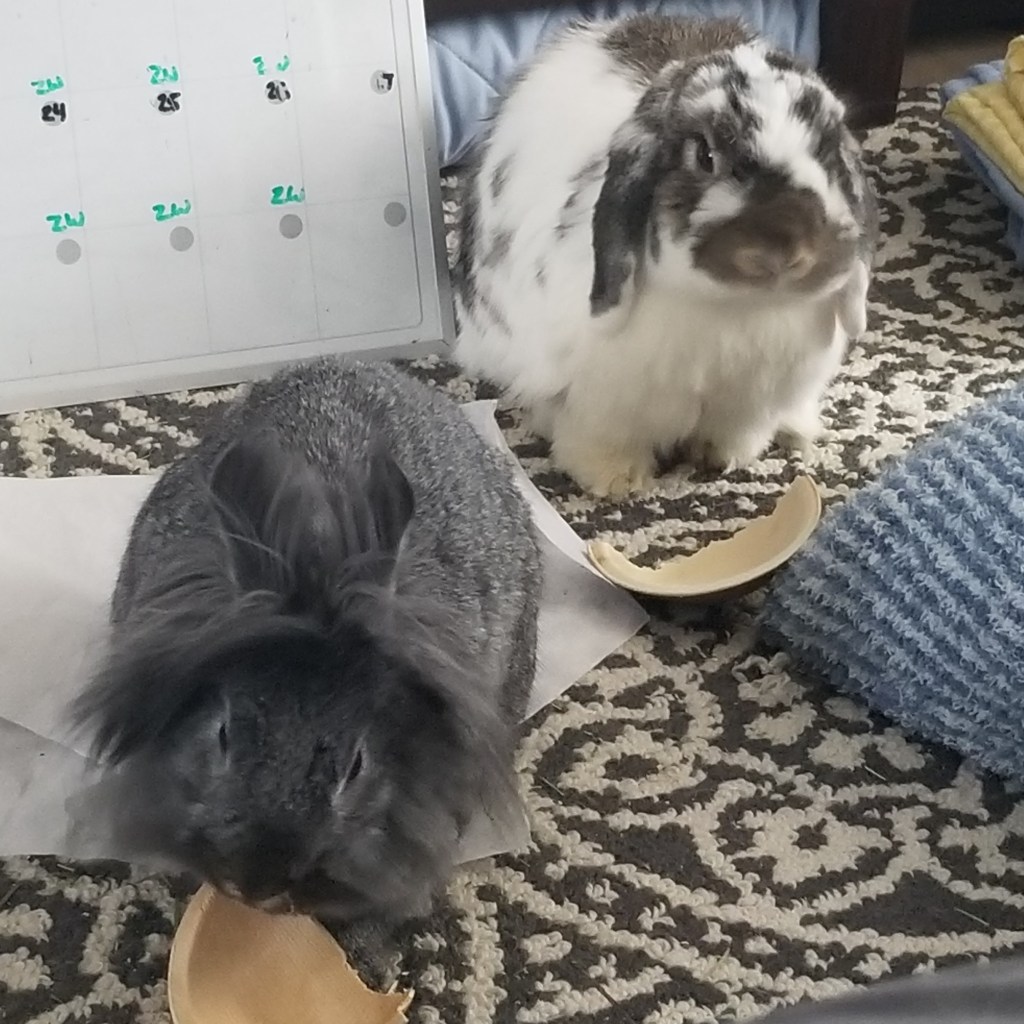
I was doing my skincare one night, and I looked over at my bunnies and I just started crying. I was testing some new products on my skin, and I imagined someone testing products on my bunnies, and it broke me inside. While the instant balling fest was due to not having my ADHD medication, I decided to commit to being more conscious about what products I was purchasing.
This post is the results of my cumulative research from January 2024 to April 2024. I will link the articles that I used to pull this information together. If you are very emotional when it comes to animal treatment, maybe skip the first section, where I summarize the different tests that these animals have to endure. Afterward, I lay out the different “levels” or categories of the Cruelty-free conversation and my thoughts.
Types of Animal Tests
Notes:
- This is a “spark notes” version of the Types of Animal Tests by Leaping Bunny
- Animals used in these experiments are most commonly rabbits, fish, mice, and rats. The Humane Society states that “Animals used in experiments include baboons, cats, cows, dogs, ferrets, fish, frogs, guinea pigs, hamsters, horses, llamas, mice, monkeys (such as marmosets and macaques), owls, pigs, quail, rabbits, rats, and sheep.” (Humane Society)
- A substance can refer to chemicals, ingredients, or finished products.
Draize Test: Substances are forced into one eye and evaluated for side effects over a few days or weeks
Acute Toxicity Testing: Animals are force-fed substances at different concentrations to discover what the “lethal dose” of that chemical is
Skin Irritation Testing: Testers shave spots on the animal and place substances on the exposed skin to determine skin damage or side effects
Ecotoxicity Testing: Tested on Fish. A lethal dose of a substance is put into the water to find what dose will kill 50% of the test population. Another test adds chemicals into the water and the test population is monitored for growth, reproduction, fertility, and life span.
Carcinogenicity Tests: Substances thought to cause cancer are fed, applied, or inhaled over time by test animals. At the end of the testing period, the animals are killed and examined for cancer.
Reproductive and Developmental Toxicity: Different substances are given to pregnant animals to determine the effects on the offspring.
Cruelty-Free Categories
The Cruelty-Free conversation includes three different categories, “Require by Law,” Parent Companies, and Certifications. I made this graphic lay out the conversation. Please let me know if I need to elaborate on any of these categories. Click on the image to enlarge it in a new tab.
Disclaimer: Vegan and Cruelty-free are different. Vegan products are products that have no animal-derived ingredients. Cruelty-free products are products that are not tested on animals. In other words, the label vegan refers to ingredients whereas cruelty-free refers to the safety and result tests a product or an ingredient goes through. A product can be both cruelty-free and vegan but remember that vegan and cruelty-free are different labels with different meanings. At this time, I am not looking into vegan cosmetics. Let me know if you would like me to do some research into that category.
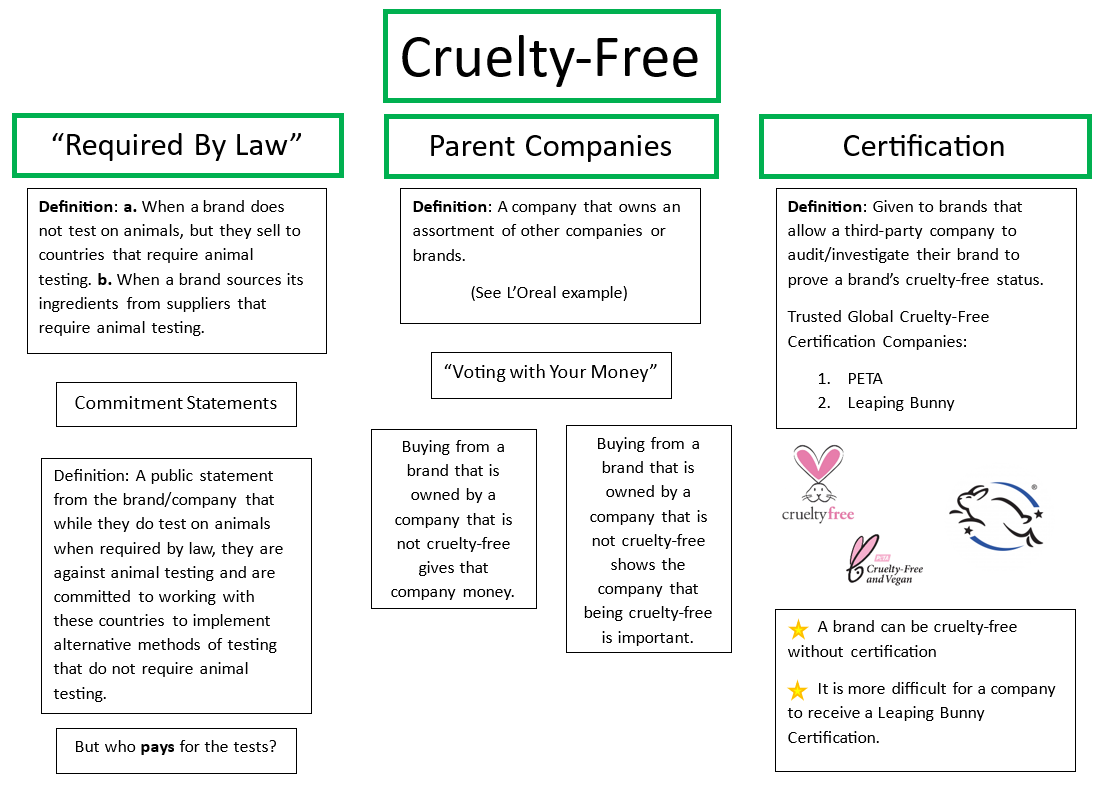
Note: There is a fourth category which I would call “Animal Friendly.” I did not include Animal Friendly in this graphic because it is mostly a marketing term and does not mean a product is cruelty-free.
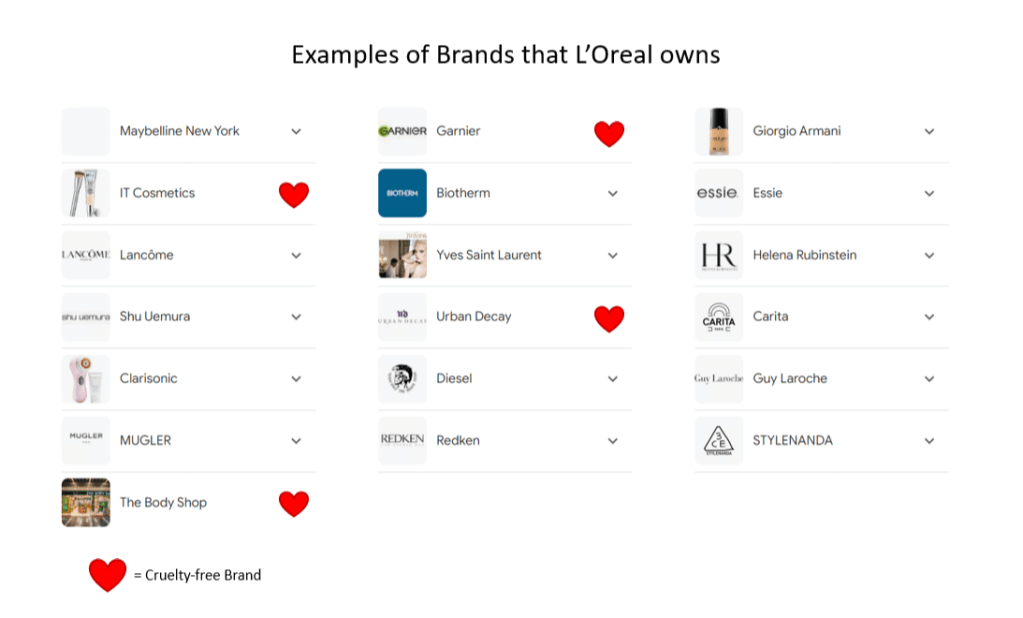
To give a little more context into the Parent Company Conversation, here are some of the brands that L’Oreal owns. I have marked the cruelty-free ones.
Brianna’s Thoughts
In the beginning, I thought I was okay with brands that were in the “Required by Law” category. The main conversation around this category comes down to China because it is the largest country/market that still requires Animal Testing. I was conflicted about this category because the Chinese population does not have the power to make changes in China, and neither do I. Brands with commitment statements often state that they are working to work with countries to use alternative methods. This sounds good on the surface, and may not be incorrect at all. However, many brands also state that they do not pay anyone to test their products on animals, yet for a brand to enter the Chinese market, they have to pay China to bring in their products and conduct those tests.
Many brands still sell their products in China, but they don’t participate in animal testing at all! Animal testing is only required for products that are made outside of China and IMPORTED into China to be sold in physical, brick-and-mortar stores in China. If a product is made IN China or sold online only, animal testing is not required. (Important Note: As of 2024 products made for infants and special use cosmetics, “products for the function of anti-freckle/whitening, sunscreen, hair dye, hair perm, anti-hair loss, and new efficacies,”) are still required to undergo animal testing regardless of where the product is made. (CIRA Group)
I recently finished a cruelty-free brand list for Sephora (stay tuned.) After completing this list, I was quite surprised at the different companies that are and aren’t cruelty-free. I concluded that if Charlotte Tilbury (Leaping Bunny China Certification Certified) and Anastasia Beverly Hills (PETA Certified) can be cruelty-free, why can’t Benefit Cosmetics? If Tatacha (PETA Certified) can be cruelty-free, why can’t Fresh? Why can’t the Sephora Collection be cruelty-free when the Ulta Beauty Collection (PETA Certified) is? If a brand is against animal testing, there is no excuse for allowing products to be tested when laws require it
When it comes to the Parent Company conversation, I am okay when it comes to purchasing from cruelty-free brands that are owned by companies that are not cruelty-free. Brands do not always have control over who owns them. I believe in “voting with your money” and I want to support brands that are holding to their values even when the company that owns them doesn’t support them.
Thank you so much for reading! I hope you found this research helpful. As I continue to do more research, I will continue to share my findings.
Let me know your thoughts!
- Where do you do research?
- Was there anything I shared today that you didn’t know before?
- Was anything I shared incorrect? Where can I do more research?
 Brianna Rae